St. Louis Metro · Metro East Illinois
Commercial snow removal that shows its work.
We plow, salt, and clear commercial properties across the St. Louis metro — and we prove every visit with a geo-stamped clock-in, photos, and a completed checklist. You get a lot that opens on time and a paper trail that holds up when it matters.
What we handle
Parking lot plowing
Trucks with commercial plows, dispatched at your contracted trigger depth. Lots cleared before business open on overnight storms, with drive lanes and fire lanes kept passable during long events.
De-icing & salting
Bulk rock salt and treated salt from calibrated spreaders, with calcium and magnesium chloride for garages, new concrete, and landscape-sensitive frontage. Ice-only events get their own dispatch — most St. Louis winters throw more freezing rain than blizzards.
Sidewalk crews
Dedicated walk crews — separate from the plow trucks — clearing entrances, ADA routes, and walkways with equipment and melt products sized for concrete, not asphalt.
Snow hauling & relocation
When piles start eating parking stalls or melting across drive lanes, we load and relocate on site or haul off site with loaders and trucks, billed time-and-materials.
Parking lot striping
The same plows and salt that keep your lot safe all winter are what wear its striping fastest. Our striping division restripes lots each spring — layout, ADA-compliant accessible stalls, fire lanes, and stencils.
GC & subcontract work
We sub for general contractors and facility-service providers that need a St. Louis snow crew with real documentation. Scope, COI, and per-event reporting handled like a sub should.
Built for a St. Louis winter
St. Louis averages about 17–18 inches of snow a season — but it rarely arrives politely. A typical winter here is a handful of plowable events, a dozen marginal ones, and several ice storms where nothing accumulates and everything is dangerous. Freeze-thaw cycling around 32°F is the defining local hazard: lots that melted at 3 PM glaze over by 7 PM.
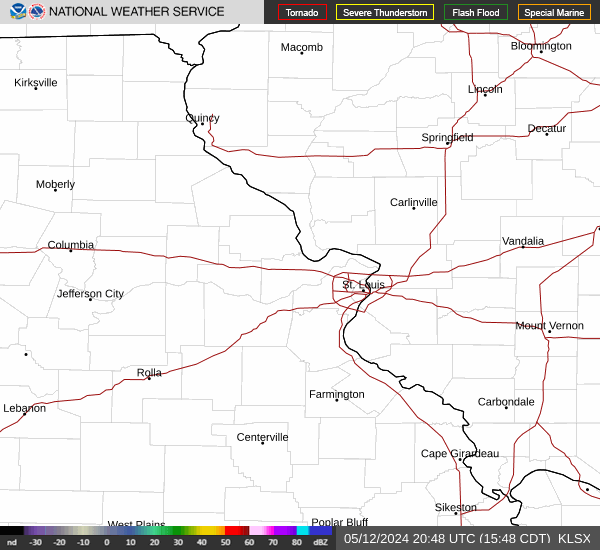
That is why our dispatch runs on National Weather Service monitoring around the clock, not on someone waking up and looking out a window. We track storm timing, pavement temperatures, and refreeze windows, pre-treat when it will help, and put crews on lots at the contracted trigger — 24/7, including holidays.
We are a two-owner local company. The people who quote your property are the people responsible when it snows at 3 AM.
How a storm actually goes
Monitor
NWS forecasts, radar, and pavement temps watched continuously. You are on a route plan before the first flake.
Pre-treat when it pays
For storms starting as snow on warm pavement, pre-applied salt prevents the bond that makes lots hard to scrape clean. We pre-treat when conditions justify it — not to pad an invoice.
Dispatch at trigger
Crews roll when your contracted trigger depth is met — commonly 1" or 2" — with zero-tolerance dispatch available for medical and high-liability sites.
Clear and document
Plow, salt, walks — then geo-stamped clock-in, photos, and the site checklist before the crew is allowed to leave.
Report
You get a per-event service record: what was done, when, and in what conditions. Keep it for your files; your insurer will thank you.
Proof of service, every visit
Every visit ends with a geo-stamped clock-in, timestamped photos, and a completed site checklist. Our operations software refuses to mark a visit serviced without all three — it is enforced in the database, not just written in a policy binder. When a slip-and-fall claim shows up months later, you hand your insurer a contemporaneous record instead of a memory.
Read exactly how the system works — and why property managers care — at How We Prove Service.
Contract models
There is no single right way to buy snow removal — there is a right way for your budget and risk tolerance. We write all four; the Pricing Guide explains the trade-offs with real numbers.
Per-push
Pay per visit. Cheapest in a light winter, most exposed in a heavy one. Best for owners comfortable with variable cost.
Per-inch
Tiered pricing by accumulation depth per event. Scales cost to the storm instead of the visit count.
Seasonal
One fixed price for the winter, November through March. Budget certainty; we carry the weather risk. Multi-year terms smooth out the variance for both sides.
Time & materials
Hourly equipment and labor plus materials at cost. The honest model for hauling, loader work, and open-ended storm cleanup.
Get a number for your property
Send the address and we walk the lot, measure it, and quote it — usually within 24–48 hours in season. Or call (314) 501-SNOW any hour during a storm.
Commercial snow removal in St. Louis — straight answers
How much does commercial snow removal cost in St. Louis?
Typical St. Louis metro ranges: a small commercial lot (about half an acre) runs $95–$200 per push; a 1–2 acre lot runs $200–$500 per push; larger lots price out around $150–$300 per acre per push. Salting is separate, usually $95–$260 per application depending on lot size. A full-service seasonal contract (plowing, salting, and walks) for a typical 1-acre property lands around $8,000–$16,000 for the winter. Per-push is cheaper in a light winter; seasonal buys budget certainty. Every real number starts with a site measure — lot geometry drives cost more than raw acreage.
When does a commercial parking lot have to be cleared?
There is no single statute that sets a depth — it is set by your lease, your insurer, and your risk tolerance. Most commercial contracts in the St. Louis area use a 1-inch or 2-inch trigger depth, with lots cleared before business open after overnight snow and kept passable during long events. High-liability sites like medical buildings often contract zero-tolerance service, where any accumulation gets a response. Whatever the trigger, the critical part is documenting when the work was done — that record is your defense if someone falls.
Do you serve Illinois and the Metro East?
Yes. We serve the Missouri side of the St. Louis metro plus Metro East Illinois — including Edwardsville, Glen Carbon, Collinsville, Granite City, Pontoon Beach, and Fairview Heights. The I-55/I-270/IL-255 logistics corridor around Edwardsville is a core service area.
What happens when it ices instead of snows?
Ice events get their own dispatch — you do not need accumulating snow to need us. Freezing rain and refreeze nights are treated with bulk or treated salt; below roughly 15°F, where rock salt slows down, we switch to treated salt or calcium chloride. Most St. Louis winters produce more ice calls than plow calls.
How do I know your crew actually showed up?
Every visit is recorded with a geo-stamped clock-in at your property, timestamped photos, and a completed checklist — and our system will not let a crew mark a visit serviced without all three. You get the per-event record. No 'trust me, we were there.'
Get a number for your property
Send the address — we walk the lot, measure it, and quote it, usually within 24–48 hours in season. Storm emergency? Call any hour.
(314) 501-SNOW